History of the retreat center in Maria Stein
The history of the Maria Stein Retreat Center traces its origins to the Missionaries of the Precious Blood in Switzerland, who established their third U.S. convent in Maria Stein in 1846. The current Retreat Center was developed as a separate facility opened by the Sisters in the 1960s to meet the increasing demand for retreats. In the 2000s, it transitioned into an autonomous, lay-governed entity known as the Spiritual Center of Maria Stein.
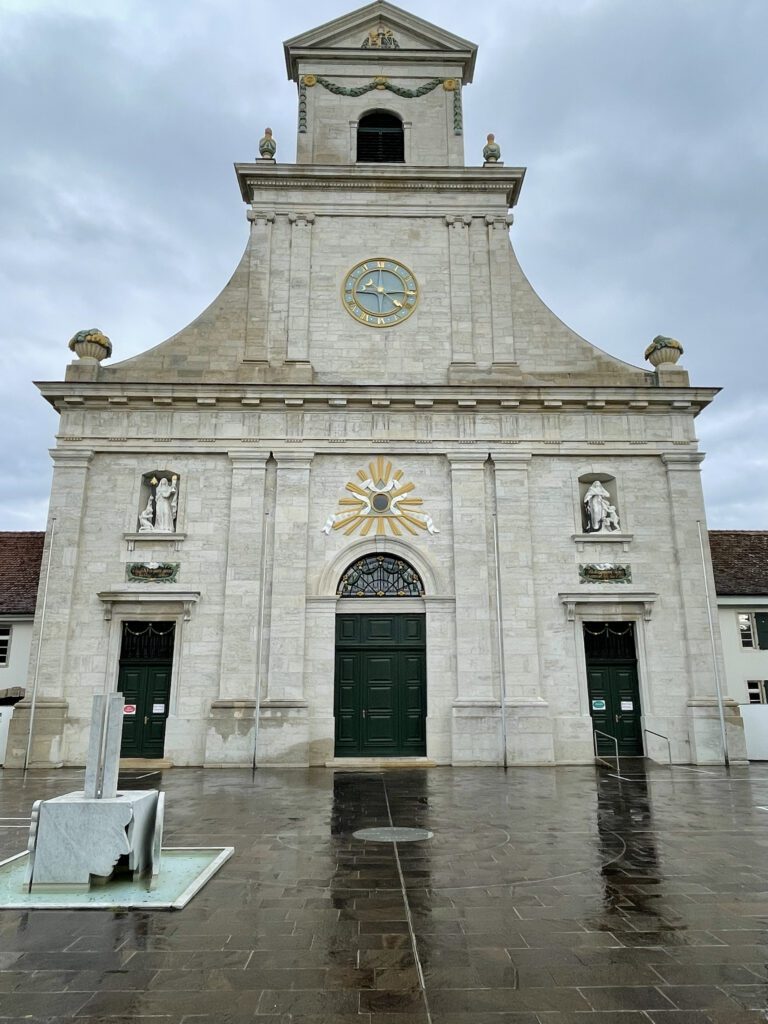
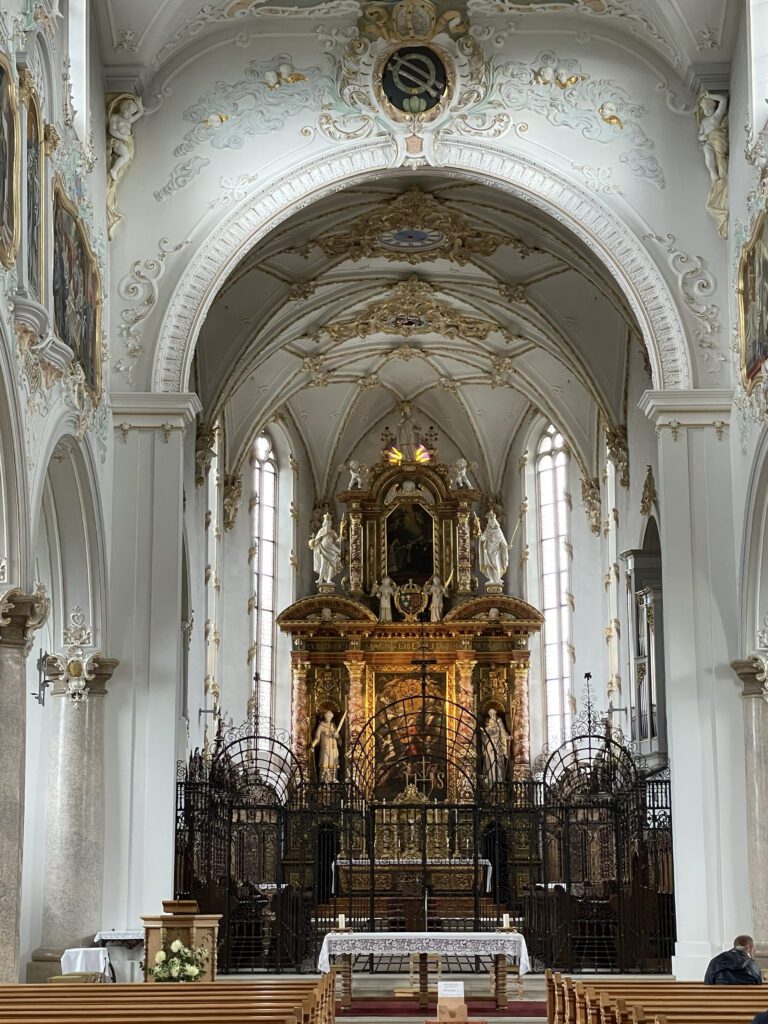
Mariastein Abbey in Switzerland
Perched on a cliff near Basel, Switzerland, the Mariastein abbey has attracted pilgrims since the 14th century. The story began when a child playing near the edge of a cliff fell, landing about 150 feet below onto a flat rock. Remarkably, the child was unharmed, believed to be due to the intercession of the Blessed Virgin Mary, who is said to have caught the child. In response, people placed an image of the Blessed Mother in a nearby grotto, and later, a chapel was built at the site of the fall. Then, in 1540, a second incident occurred at the exact same place, and the boy who fell was again unharmed.
Soon, the place of pilgrimage attracted believers from near and far. The Chapel of Sorrows is a pilgrimage chapel built at the end of the 15th century on the edge of the rock above the ground.
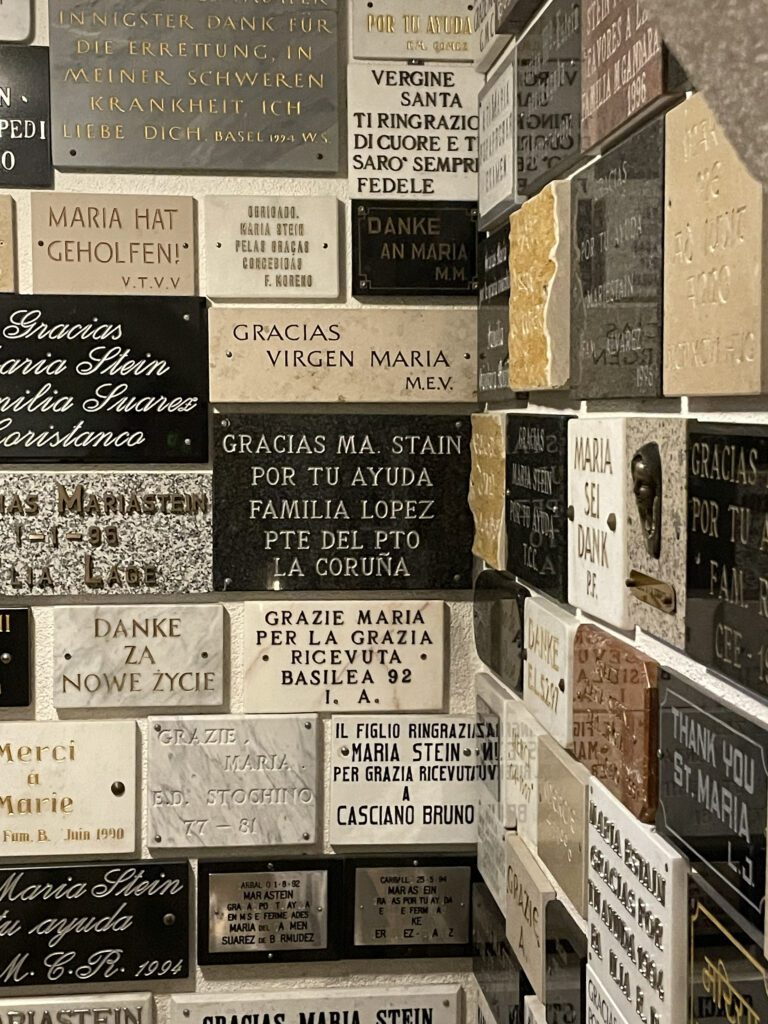
Today, the monastery is open to visitors who can climb down the 56 steps to where both the boys fell and view the many Ex-voto plaques that testify to miracles received through the intercession of the Blessed Virgin Mary.
Maria Stein Motherhouse in Ohio
1846–1923: Founded in 1846 by the Missionaries of the Precious Blood as the congregation’s third U.S. convent, the Maria Stein location initially served as a convent for the Sisters and was named after the abbey in Switzerland. In 1875, the convent became home to an extensive collection of relics, transforming it into a pilgrimage destination. New chapels were built over time to accommodate the growing number of visitors.
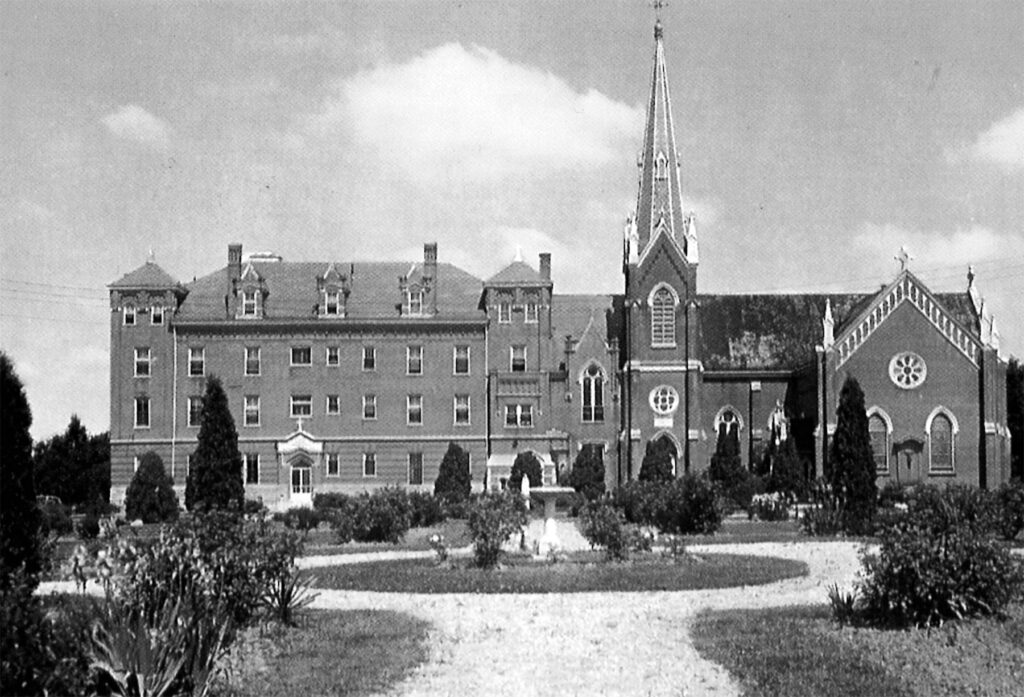
It served as the Motherhouse of the Sisters of the Precious Blood from 1887 until 1923, when the Motherhouse moved to Dayton, Ohio.
1950s–1970s: Following the relocation of the Motherhouse to Dayton, Ohio, the Maria Stein property became a residence for retired Sisters and continued to welcome pilgrims. In the 1950s, recognizing the need for more outreach, the Sisters began using vacant rooms to host retreats for laywomen. The first of these retreats took place in 1953 and quickly gained popularity, serving women’s sodalities, high school girls, and other groups.
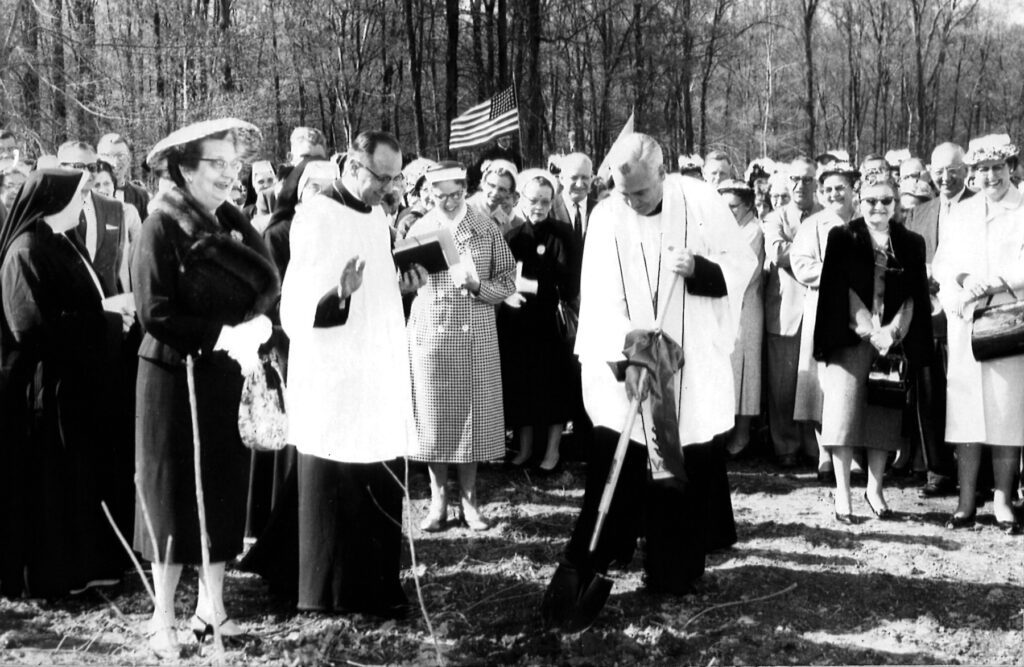
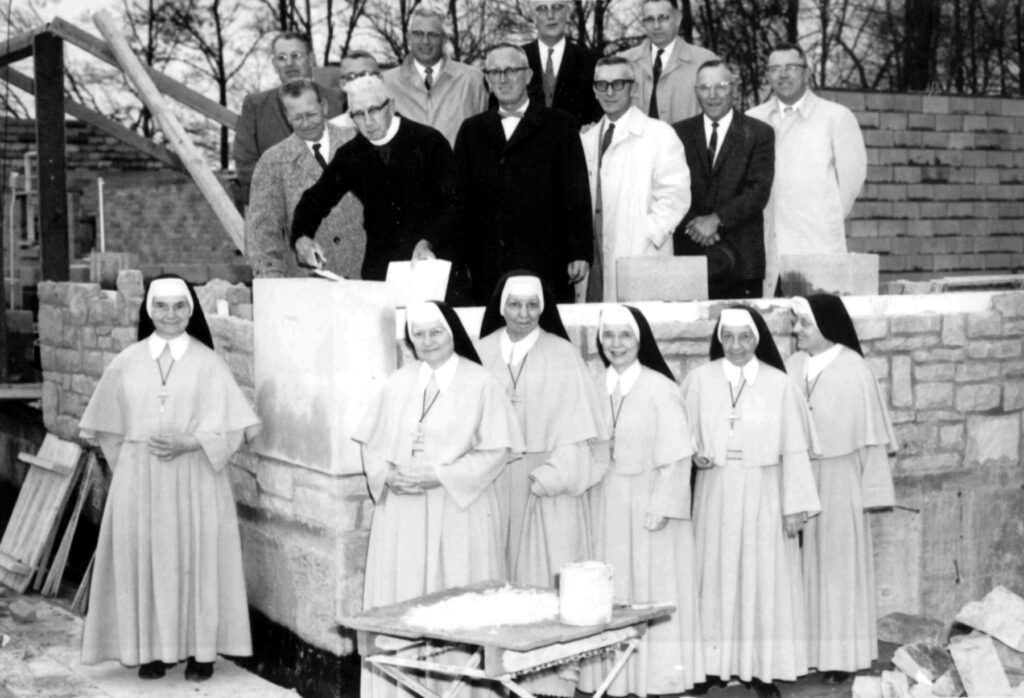
Recognizing the need for more space, a dedicated retreat house was built in 1961. The former convent and new Retreat House operated together as the Maria Stein Center in the late 1960s and early 1970s, serving pilgrims and retreat guests.
By the 1990s, declining numbers prompted the Sisters to reconsider their management of the large property. It was decided that the Sisters would relinquish management of the Retreat House and focus on maintaining the Relic Shrine.
On November 2, 1997, a “Ritual of Closure Ceremony” was held in the Chapel. In the presence of an overflowing crowd of friends and staff, the Sisters of the Precious Blood thanked God for the blessings of the Retreat House and said goodbye to their future involvement.
The Retreat House building sat empty during this time … and began to fall into disrepair.
In the late 1990s, while the Sisters were considering offers for the Retreat House, something else was happening. While attending a prayer meeting, Deacon Jerry Buschur felt the Holy Spirit instruct him to buy and reopen the Retreat House. He shared this vision with others at the meeting, but they did not take it seriously since the property would likely be purchased by someone else. He asked them to wait. One deal after another fell through, and Jerry began reaching out to people he knew to see if they would be interested in forming a group to purchase the Retreat House.
Clearly, the Holy Spirit was at work, and after much discussion and persuasion, the Board of Directors of the Spiritual Center of Maria Stein was formed on August 13, 1999. This dedicated group received the keys in a ceremony at the Chapel, standing before the same Altar where the Ritual of Closure was held two years earlier.
The hard-working group spent months fixing broken water pipes, cutting down weeds as tall as the roof, repairing the heating and air conditioning units, and replacing as much as they could with limited resources. Their first electricity bill was more than they even had in their checking account!
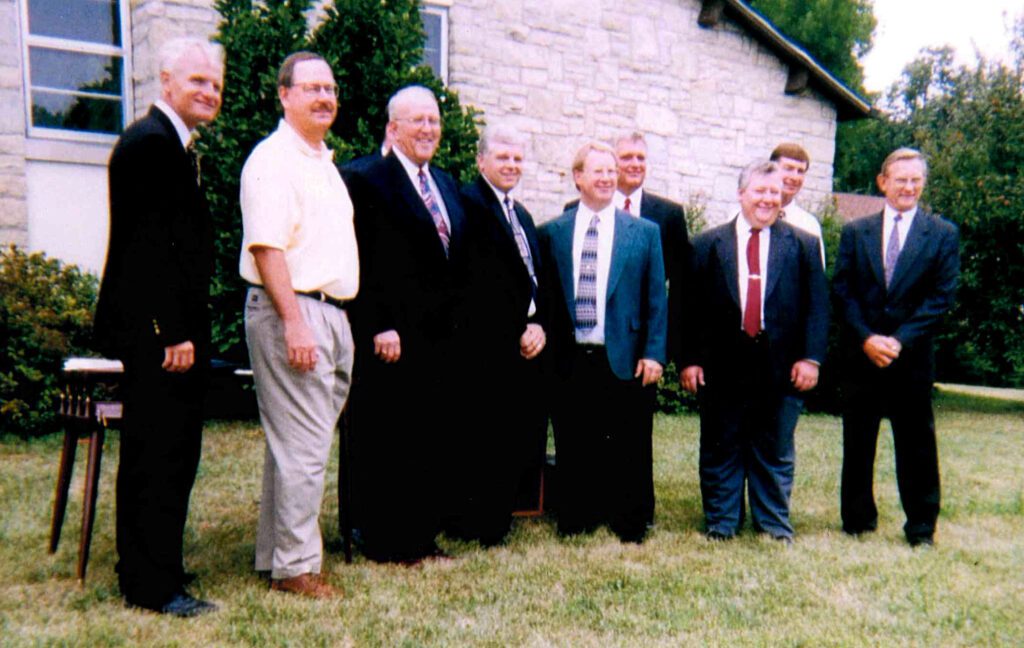
The Retreat House officially reopened on September 1, 1999, with Brother Tom Bohman serving as the Director. The board at that time shared the same goal as today: to provide a space where people of all faiths can come and spend time in prayer while on retreat.
Present Day:
Rooted in Christian principles, the Maria Stein Retreat Center offers retreat and educational experiences for everyone. Our environment fosters peace, prayer, and community, providing a tranquil space for individuals seeking to deepen their personal relationship with God. The Retreat Center welcomes all businesses, churches, youth groups, community organizations, and people of all faiths to gather.
Re-branded as the “Maria Stein Retreat Center” in 2024, we continue the history of welcoming those seeking solitude, personal growth, or a space to bond with others. We offer a unique sanctuary where you can pray, reflect, and discover God’s peace.
We are a 501 (c) (3) nonprofit led by our board of directors. All donations support both locations of the Maria Stein Retreat Center.
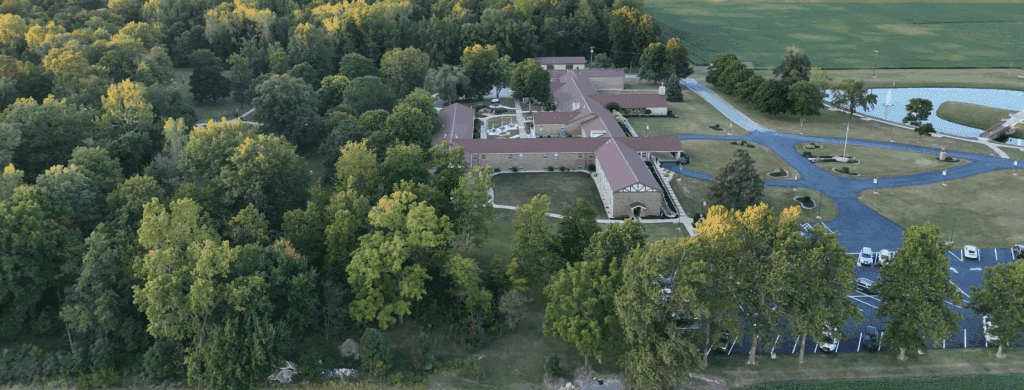
The “at the Woods” location in Maria Stein, Ohio, is nestled on an 87-acre wooded property, providing a peaceful setting for relaxation, spiritual growth, and community service. The facility can host 1 to 4 retreats simultaneously, and the building is often near full capacity.
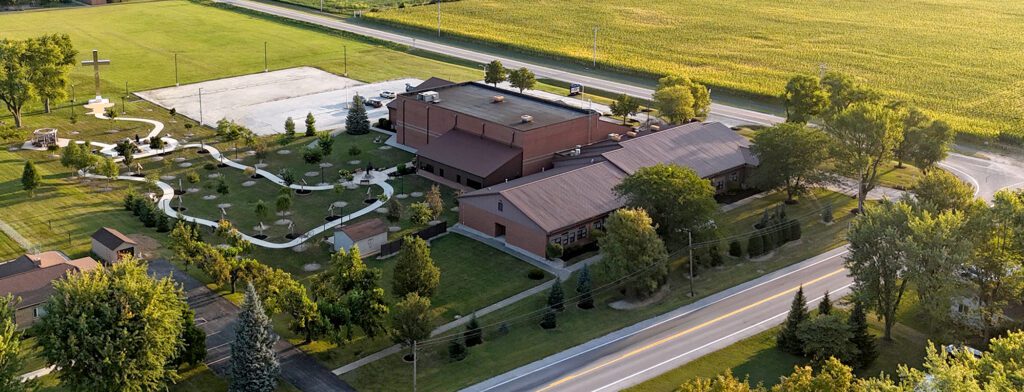
The “at the Lake” location in Montezuma, Ohio, is a former school that has been converted into a multi-purpose facility near Grand Lake St. Marys. Although this location is smaller, it is the ideal size to host one retreat at a time, thereby significantly increasing the number of guests we can accommodate.
Our staff today numbers nearly 50 people – most are part-time, except for the Coordinator and the Head of Maintenance. Many of our staff work in the kitchen since we provide all meals for our guests. Additionally, we are blessed to have volunteers who help with general housekeeping two to three times a week during the busiest parts of the year.
Weekday retreats are typically Catholic High Schools hosting their Kairos retreats. These retreats usually last four days and three nights, with larger schools bringing over 100 youth and team leaders. Schools travel from locations as close as Sidney, Ohio, to as far as Sandusky, Ohio, which is 146 miles away.
Weekend retreats are typically for adult groups arriving on Friday and departing on Sunday, so our teams often work on weekends as well as weekdays.
We typically book retreats 3 years in advance and host over 17,000 people a year while serving more than 36,000 meals! We welcome visitors from around the world, traveling from Tasmania, Australia, and Tanzania, Africa, which are 8-10,000 miles away.
Land of the Cross-Tipped Churches
The Land of the Cross-Tipped Churches is a rural area in western Ohio, centered near Maria Stein in Mercer County. Its name comes from the many large Catholic churches that shape the area’s architecture. These and other buildings were built by the Missionaries of the Most Precious Blood under the supervision of missionary priest Francis de Sales Brunner. Under his leadership, the Missionaries established numerous churches, schools, and seminaries in the region.
The earliest buildings from the mid-19th century were mostly small wooden or simple brick structures. Most of these were replaced in later construction periods; only two from this generation are still in use as churches. Many of the massive Gothic revival churches that remain today were built in the late 19th and early 20th centuries by Anton DeCurtins or his descendants. The region’s churches have undergone little change since the early 20th century, and only one new parish has been established since 1925.
https://www.landofthecrosstippedchurches.com
The Sisters of the Precious Blood
The Sisters of the Precious Blood trace their spiritual roots to Mother Maria Anna Brunner, a spiritual daughter of St. Gaspar del Bufalo, the founder of the Missionaries of the Precious Blood. The congregation originated at Castle Loewenberg in Switzerland. Fr. Francis de Sales Brunner, a Missionary of the Precious Blood, played a key role in bringing the first of these Sisters to America in 1844.
While in Rome, Bishop Purcell of Cincinnati learned of German-speaking religious and petitioned for some to come to Ohio to serve the numerous German-speaking Catholics in northern Ohio. Subsequently, Fr. Brunner was sent to America in 1843, bringing with him on his first trip seven Precious Blood priests, seven Precious Blood brothers, and many relics he had collected over the years. The following summer, in July 1844, the first three Sisters of the Precious Blood arrived in this area, bringing with them the remainder of his relic collection.
The cornerstone for the convent at Maria Stein was laid on November 16, 1845. In fall 1846, Father Brunner dedicated the chapel under the title of Mary Help of Christians and named the convent Maria Stein, after the Swiss Benedictine convent where he was ordained. The new convent for the Sisters was completed in 1901, a four-story building constructed from locally sourced bricks and wood from the surrounding heavily wooded area.
In 1850, Loewenberg was sold, and all the Sisters moved to America. Ten foundations quickly followed, consisting of large buildings housing community members and extensive farmland, established in Mercer, Auglaize, Seneca, and Putnam Counties in Ohio, as well as Jay County, Indiana.
Maria Stein served as the Motherhouse of the Congregation of the Sisters of the Precious Blood until 1923, when it was moved to Dayton, Ohio. Since 1844, the Sisters have dedicated themselves to serving God’s people across the United States through education, pastoral work, healthcare, and social services—running schools, orphanages, nursing homes, parishes, and seminaries. Their ministries have extended the influence and spirituality of the Sisters of the Precious Blood across many states, as well as to Chile in South America and Guatemala in Central America.